All published articles of this journal are available on ScienceDirect.

The Significant Impact of Service Quality and Service Convenience on Customer Satisfaction: An Empirical Study from the Airline Industry in Vietnam

Abstract
Introduction
Considering the rapid advancement of the airline sector, research must offer a comprehensive perspective on service quality and customer viewpoints. The study examines the specific relationship between service quality and consumer satisfaction in the airline industry, with service convenience and perceived risk as mediators.
Methods
The gathered data were analyzed by employing a technique known as Partial Least Squares Structural Equation Modeling (PLS-SEM), which is appropriate for complex models that contain latent variables. The research sample consisted of 375 customers who had experience travelling by air and were willing to participate in the study.
Results
The findings underscore the mediating role of service convenience in the attainment of customer satisfaction derived from service quality. Another key finding is that service quality directly affects customer satisfaction, whereas perceived risk does not substantially affect customer satisfaction.
Discussion
This study presents a discussion of the research findings, encompassing four primary components: (i) service quality has a direct impact on customer satisfaction, (ii) service quality directly influences service convenience and indirectly affects customer satisfaction through service convenience, (iii) service quality has an inverse relationship with perceived risk, and (iv) the perceived risk does not significantly impact customer satisfaction.
Conclusion
The study offers valuable insights for both researchers and managers in airlines and tourism organizations, enabling them to enhance consumer satisfaction by improving service quality and convenience in airline services. This is crucial in the present context owing to intense rivalry in the hospitality sector.
1. INTRODUCTION
Economic globalization has been significantly propelled by the rapid development of airlines, which connect nations, continents, and provide global travel routes. The history of air travel has witnessed substantial growth in passenger carriage, with competition intensifying, particularly since the early 21st century. The airline market has become increasingly competitive, requiring carriers to focus on service quality to remain viable [1]. While airlines must reduce costs to operate efficiently, this often comes at the expense of service quality and customer satisfaction.
Customer satisfaction is widely recognized as a key indicator of business effectiveness. In the airline industry, Xue and Ylagan [2] confirmed the satisfaction-performance relationship, emphasizing the critical role of customer satisfaction in airline performance. Additionally, the gap between customer expectations and actual experiences influences their overall assessment of service quality. To remain competitive, airlines must meet the growing demand for high-quality service [3]. Most carriers acknowledge that customer retention is as important as customer acquisition in today’s highly competitive industry. Given its importance to financial performance, researchers and practitioners alike have explored strategies to enhance customer loyalty [1].
Increasing customer satisfaction has emerged as a key strategy for addressing challenges in the airline industry. The Vietnamese airline sector faces several operational difficulties. According to Trinh et al. [4], infrastructure limitations pose a significant threat to carriers. Major airports, such as Tan Son Nhat and Noi Bai, frequently experience overload, resulting in delays and negatively affecting passenger experiences. Limited infrastructure can hinder both the growth and efficiency of airline operations [5].
Vietnam's aviation industry is experiencing rapid expansion, positioning it as one of Southeast Asia's fastest-growing markets, with passenger numbers approaching pre-pandemic levels [6, 7]. This resurgence is largely driven by the emergence and growth of low-cost carriers like Vietjet Air, which, together with Vietnam Airlines, dominate the domestic market. These developments have made air travel more accessible and affordable, stimulating substantial domestic tourism demand. However, this rapid growth is placing significant strain on Vietnam's existing service infrastructure, particularly at major hubs, such as Tan Son Nhat (Ho Chi Minh City) and Noi Bai (Hanoi) airports, which often operate beyond their designed capacities, leading to congestion, delays, and diminished passenger experiences [8]. Despite significant government investments and plans for new airport construction and upgrades, such as Long Thanh International Airport, infrastructure development struggles to keep pace with growing demand, further constrained by challenges in attracting private investment due to high costs and long capital recovery periods [7]. This bottleneck affects both the aviation sector and the broader tourism industry, highlighting the urgent need for coordinated infrastructure development to support Vietnam’s ambitious tourism growth targets.
Financial constraints and broader economic factors also present major challenges. Economic recessions can reduce travel demand and air cargo transportation, while rising interest rates and tightening fiscal policies increase debt burdens for airlines [9]. The COVID-19 pandemic caused significant financial losses due to operational disruptions and decreased passenger numbers. Although Vietnam Airlines has recently reported a strong recovery and record profits, the industry remains vulnerable to economic fluctuations and global events.
Finally, intense competition represents a serious obstacle to development. The Vietnamese aviation market is becoming increasingly competitive, with established and new airlines vying for market share. Competitive pressures can reduce profitability, particularly for airlines without strong financial support, as new entrants may lower fares to attract customers, creating challenges for existing carriers [9, 10].
Therefore, this study aims to identify the key variables that significantly influence customer satisfaction in Vietnam’s airline industry, providing practical insights for service providers seeking a competitive advantage in the current market.
2. LITERATURE REVIEW
2.1. Service Quality
The concept of quality originated in the manufacturing sector, where the primary focus was on quality control [11]. However, service quality differs significantly, as the intangibility, perishability, inseparability, and heterogeneity of services make the product-based quality paradigm inadequate for evaluating service performance [12]. Using factor analytic psychometric analysis, Parasuraman et al. [13] identified five dimensions of consumers’ perceptions of service quality: tangibles, responsiveness, assurance, empathy, and reliability. Overall, the foundation of service quality lies in a service provider’s ability to accurately identify and understand customer expectations [14]. The main challenge for modern service businesses is to deliver excellent service quality while simultaneously maintaining high levels of customer satisfaction. The performance of service quality is determined by the alignment between customer perceptions and their expectations.
2.2. Service Convenience
Conceptually, service convenience is a multifaceted construct that refers to consumers’ perceived time and effort required to make service purchase or usage decisions throughout the entire service consumption process. It is not only about speed but also about minimizing the mental, physical, and emotional effort a customer must expend. The more convenient a service is, the lower the perceived “non-monetary cost” for acquiring and using it, thereby enhancing the overall value proposition [15].
Service convenience improves procedures and facilitates easier interactions between customers and service providers. According to Han et al. [16], consumers’ perceptions of the time and effort involved in purchasing or using a service are central to the concept of service convenience. In an increasingly time-constrained environment, making services easier to use can enhance their perceived value [17]. To improve customers’ perceptions of service quality, providers must simplify the business process with them [15]. Essentially, service convenience is about enabling consumers to complete tasks in the shortest time with minimal effort, making the service more attractive and time-saving [15].
By developing strategies that enhance convenience across its various dimensions, companies, including retailers and airlines, can strengthen customer relationships and gain a competitive advantage [18]. The significance of service convenience in the airline industry has also been highlighted in studies by Hong et al. [17] and Moon and Lee [19].
2.3. Perceived Risk
Perceived risk is an increasingly important factor in the service sector generally and in the airline industry particularly, which is known as the possible danger involved with the customer decision on a service; this impression may influence the choice to travel by plane in circumstances in which the risk is likely to surpass a level that is acceptable for the person [20]. Moreover, according to Ghotbabadi et al. [21], perceived risk is an individual's subjective assessment of his or her vulnerability to disease or unfavourable outcomes resulting from engaging in a hazardous behaviour. There are three factors: losses, importance, and uncertainty, jointly constituting a person's risk perception [22]. As such, the concept of perceived risk is multifaceted and linked to several types of risk. It was found that consumers use various risk-reduction tactics depending on the type of perceived risk [23]. Customers strive to adopt risk-reduction tactics when they perceive dangers to lower the likelihood of unfavourable outcomes and boost their confidence in purchase decisions [24].
2.4. Customer Satisfaction in the Airline Industry
The current economic environment is highly competitive, making it challenging for airlines to expand their customer base and maintain profitability. In such a competitive global market, most airlines consider maintaining existing customer relationships and ensuring customer satisfaction to be of critical importance [17]. Recognizing that retaining and satisfying customers is a key factor in business success, researchers in both academia and industry have explored various strategies to achieve this goal (Table 1) [19].
Furthermore, a bibliometric analysis using VOSviewer software creates a network of main keywords mentioned in prior research on customer satisfaction and service quality in the airline industry (Fig. 1).
| No. | Author | Sample and Data | Main Findings |
|---|---|---|---|
| 1 | Xue and Ylagan [2] | 500 participants from budget airline passengers. | Overall satisfaction with airline services is moderately significant. Strengths lie in flight attendant and ground staff services, highlighting the pivotal role of interpersonal interactions in shaping passenger perceptions |
| 2 | Leon and Dixon [25] | 624 respondents from an online survey | (1) Service quality, trust, openness, and agreeableness positively affect satisfaction; meanwhile, satisfaction is negatively affected by extraversion. (2) Service quality, trust, commitment, loyalty, and satisfaction have positive effects on conative (behavioral intention) loyalty. |
| 3 | Othman et al. [26] | 100 respondents from a convenience sample | (1) Improving the tangibility of aircraft can help improve customer satisfaction. (2) Empathy does not influence customer satisfaction. (3) There is a significant relationship between brand image and customer satisfaction. |
| 4 | Shen and Yahya [11] | 200 passengers of low-cost carriers in Malaysia | (1) Service quality and price are found to be the antecedents for customer satisfaction. (2) Service quality has a higher power towards customer satisfaction than price. |
| 5 | Bi and Kim [27] | 308 older travelers in the USA | (1) Evaluation convenience is the most important dimension affecting older travelers’ satisfaction. (2) Access convenience and transaction convenience do not influence customer satisfaction. (3) Service convenience is a driving force for customer satisfaction. |
| 6 | Mayumartiana et al. [28] | 100 passengers of AirAsia | Price fairness and service convenience have an effect on customer satisfaction. |
| 7 | Lainamngern and Sawmong [29] | 565 Thai Airways’ passengers. | (1) Perceived risk has an indirect effect on customer satisfaction. (2) Service quality has a positive and indirect effect on passengers’ satisfaction. |
| 8 | Ahmadi [30] | 400 passengers at Suvarnabhumi Airport in Bangkok | (1) Service convenience has a significant direct and indirect influence on service quality dimensions and customer satisfaction. (2) Service quality directly impacts customer satisfaction. |
| 9 | Ghotbabadi et al. [21] | 776 passengers of Iranian airlines at an International Airport | (1) A direct influence of the customer’s perceived risk on the customer’s satisfaction. (2) Service quality, relationship marketing, and brand image show a negative correlation with perceived risk. |
| 10 | Leong et al. [31] | 320 passengers at the Kuala Lumpur International Airport | Tangibles, reliability, and responsiveness were found to have a direct, significant, and positive impact on customer satisfaction. |
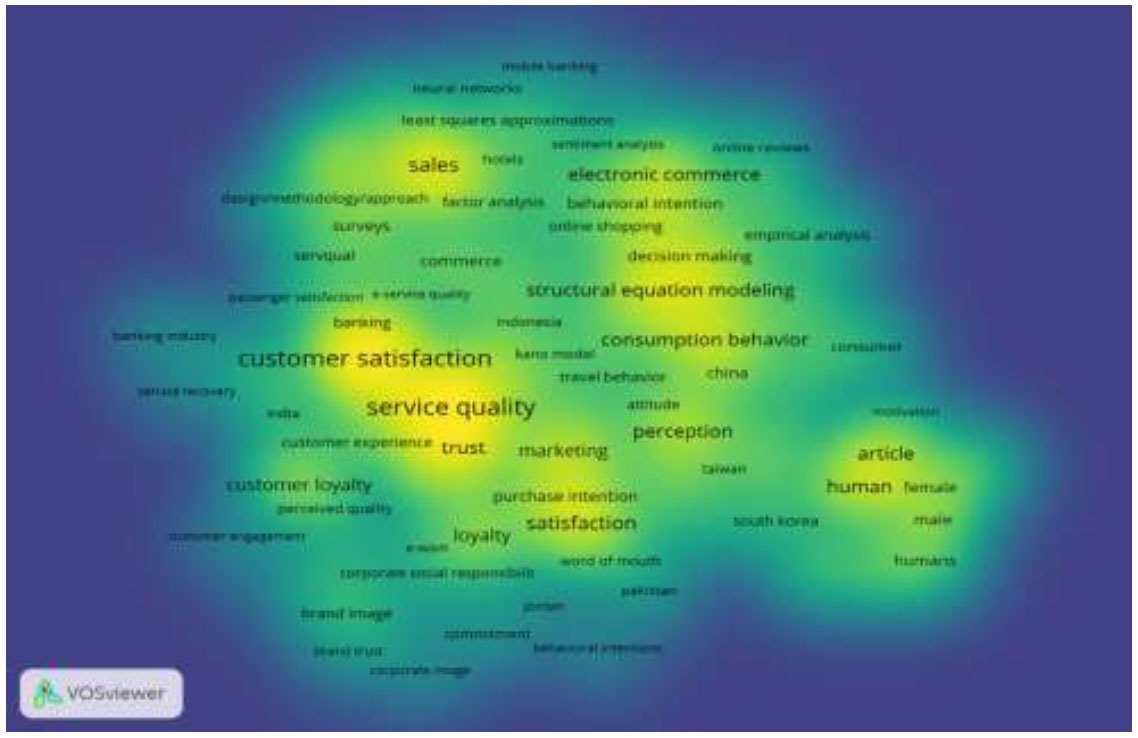
The network of main keywords from prior research.
(Source: VOSviewer, 2025).
As shown in Figure 1, there are numerous topics related to the most important keywords about customer satisfaction. As highlighted in the literature, customer satisfaction can enhance a firm’s performance; higher customer satisfaction increases customers’ willingness to pay for services, which, in turn, contributes to greater profitability for the firm. Therefore, understanding customer satisfaction would be a research-focused area. In light of the analysis, it can be considered that service quality, customer loyalty, electronic commerce, sales, and consumption behavior are highly recommended by researchers worldwide. Service quality is an essential topic that must be noted. Therefore, this research aims to provide a holistic view of customer satisfaction in airline services, encompassing service quality, perceived risk, and the mediating role of service convenience.
2.5. Analytical Framework and Hypothesis Development
Various types of risks act as obstacles in online transactions and influence consumer behavior. Businesses can better satisfy customers by understanding perceived risk [32]. Higher perceived risk increases the likelihood that consumers will refrain from making an online purchase. Feng et al. [33] examined the effects of perceived risks, socio-psychological, physical, financial, and performance, on passengers’ decisions to fly, emphasizing both the importance of perceived risks in consumer behavior and the lack of theoretical studies on their interrelationships.
Service quality can indirectly reduce perceived risk in air travel. Generally, perceived risk and perceived quality are inversely related; when consumers perceive a higher risk associated with a product or service, their perception of its quality tends to decline, and vice versa. Tzavlopoulos et al. [34] confirmed the negative relationship between perceived risk and perceived quality, noting that quality also influences consumer satisfaction. Consequently, customer satisfaction, which reflects a passenger’s overall experience rather than a single transaction, is crucial for maintaining and enhancing competitive advantage.
In the Vietnamese airline context, Lai [9] suggested that if passengers perceive an airline as risky in terms of safety, reliability, or service, their confidence and trust in that airline decrease, leading to dissatisfaction. Even when the actual service meets standards, a high pre-existing level of perceived risk can bias passengers’ evaluations, making them more critical and less forgiving of minor issues (Fig. 2).
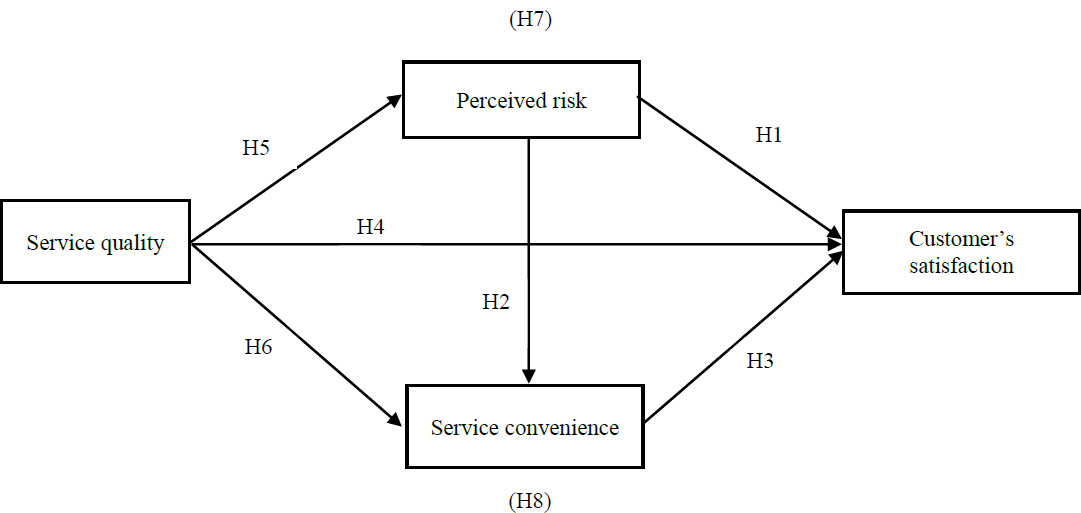
The proposed analytical framework.
(Source: Author's compilation).
H1: Perceived risk directly affects customer satisfaction in the Vietnamese airline industry
Greater convenience can provide a competitive advantage in markets where service offerings are homogeneous and lack key differentiators [35]. When the differentiating factor is perceived risk, it can significantly influence customer satisfaction and attitudes. Consumers’ perceptions and attitudes toward risk should therefore be considered when studying their behavior, as these factors can impact business outcomes. Marketing literature recognizes that perceived risk directly affects both service convenience and purchasing decisions [33].
Wai et al. [36] introduced the concept of “convenience risk,” which refers to customers’ concerns that placing an order may be difficult, that they cannot change their minds after ordering, or that there may be delays in receiving or returning products. Additionally, potential time loss in comparing products or navigating online platforms can frustrate customers, especially if they are unfamiliar with the process or the products themselves. The inverse relationship between perceived risk and service convenience is supported across various service domains: higher perceived risk reduces perceived convenience [37]. This occurs because risk often requires additional effort, time, and mental processing on the consumer's part, directly undermining the fundamental notion of convenience, ease, and minimal hassle.
H2: Perceived risk directly affects service convenience in the Vietnamese airline industry
Service convenience refers to the total intrinsic value that consumers derive from their time and effort investments across the pre-consumption, consumption, and post-consumption phases of their purchasing behavior [12]. Customer satisfaction is closely linked to consumers’ positive experiences, making the two variables interrelated. The speed and ease of interacting with retail businesses significantly influence customer decision-making. To reduce the effort required in making purchase decisions, many consumers increasingly rely on the Internet [38]. Given the growing time constraints customers face and the multiple tasks involved in purchasing, enhancing the convenience of online shopping offers clear advantages.
H3: Service convenience directly affects customer satisfaction in the Vietnamese airline industry
Service quality is considered to be an important determinant of customer satisfaction [1]. Service quality impacts customer feelings in many ways. The perceptions that arise are defined as a psychological notion known as “subjective disconfirmation”. Besides, satisfied customers have a tendency to have a variety of effects on a business's profitability [19]. It is challenging to develop a standardized measurement kit for the phenomenon, as customer satisfaction is subjective and varies from one consumer to another. Generally, customer satisfaction arises from better service quality [39]. Numerous studies confirm a positive correlation between service quality and customer satisfaction in the Vietnamese airline sector. As service quality improves across various dimensions, customer satisfaction levels tend to increase proportionally [1].
H4: Service quality directly affects customer satisfaction in the Vietnamese airline industry
One of the key elements in business success is reportedly providing high-quality services. Service excellence is crucial for creating a positive perception of a service provider, and a favourable perception of a service might boost a visitor's liking for that usage, increasing the likelihood that they will repeat purchase [38]. Besides, perceived risk would have the opposite effect [14]. When buying products or services from an online business, consumers use certain attributes or dimensions to assess the quality of the services offered. These features may improve perceived quality, help retain consumers, and boost revenue, as they influence customers' intentions to repurchase [34].
H5: Service quality directly affects perceived risk in the Vietnamese airline industry
According to Joudeh and Dandis [40], service quality and service convenience are two sources of creating perceived value for customers. Gaining perceived value would lead to higher customer satisfaction. Keshavarz and Jamsidi [41] argued that providing services via improved facilities and enhancing service convenience may lead to an increase in sales revenue. Service convenience can be included in the components of service quality that relate to “process quality”. However, Roy [12] asserted that customers may pay a price for service convenience, which is connected to their discretionary time and effort. Service providers should not anticipate service convenience to increase the impact of service quality.
H6: Service quality directly affects service convenience in the Vietnamese airline industry
In addition, when customers perceive a higher level of risk, such as financial or safety concerns, the positive impact of high service quality on satisfaction is lessened. Conversely, lower perceived risk amplifies the positive effect of service quality [29]. Additionally, service convenience, or the ease and efficiency of accessing and using the service, influences customer satisfaction. When service convenience is high, customers are more likely to be satisfied, even if service quality is moderate [27]. Conversely, low service convenience can diminish the positive impact of high service quality. With increasing competition in the Vietnamese airline market, passengers have more choices. Perceived risk can be a crucial factor in their decision-making and their post-flight satisfaction evaluation. Airlines that minimize perceived risk through quality service are likely to have more satisfied customers. Therefore, airlines should focus on reducing perceived risk through transparent communication and reliable performance, as well as enhancing service convenience through efficient processes and user-friendly platforms, to maximize customer satisfaction. Accordingly, the proposed indirect relationships are as follows:
H7: Perceived risk mediates the relationship between service quality and customer satisfaction in the Vietnamese airline industry
H8: Service convenience mediates the relationship between service quality and customer satisfaction in the Vietnamese airline industry
3. METHODS AND ANALYSIS
3.1. Data Collection
The research instrument, comprising all scale items for service quality, service convenience, perceived risk, and customer satisfaction, was adapted from the studies by Agarwal and Gowda [42], Hong et al. [17], and Lainamngern and Sawmong [29]. The items were graded using a Likert scale with five points, with (1) representing strongly disagree and (5) representing strongly agree. In this first stage, random survey participants (already customers) rated their views on the factors that determine customer satisfaction in the Vietnam Airlines sector. The second part of the questionnaire consisted of questions on the respondent's demographic information. Generally, the research sample comprises 375 customers with experience in air travel. From a statistical perspective, this sample size is adequate to ensure sufficient power for detecting significant relationships between variables, particularly in survey-based quantitative research. According to Hair et al. [43], the number of respondents should be at least five times the number of items. Therefore, with 375 participants, the study exceeds the minimum thresholds (18 × 5 = 90 samples), thereby enhancing the credibility of the analysis.
Data collection was carried out online through social media platforms (such as Gmail, Facebook, Instagram, etc.) during the period January 2025–March 2025. The target respondents were Vietnamese customers, especially those who have experience with airline services. At the researcher’s request, the survey link was sent directly to individuals in the researcher’s network or to specific online groups. To reduce non-response bias, respondents were recruited from individuals or groups who pay closer attention to airline services.
3.2. Data Analysis
The collected data were analyzed using Partial Least Squares Structural Equation Modeling (PLS-SEM), a method suitable for complex models that include latent variables. PLS-SEM is an effective statistical technique for simultaneously evaluating complex relationships with relatively small sample sizes, and it does not require assumptions about the data’s distribution [43]. Valid data were assessed through both measurement and structural model evaluations.
4. RESULTS
4.1. Demographic Analysis
The demographic profile of the 375 respondents revealed a diverse yet focused sample suitable for studying airline service quality and convenience in Vietnam. In terms of age, the majority fell within the working-age range, with the largest group aged 31–40 (29.87%), followed by those aged 41–50 (26.94%) and 23–30 (23.47%). The gender distribution was relatively balanced, with 55.47% male and 44.53% female participants. Regarding geographic location, a significant portion of respondents (64.5%) resided in megacities, such as Hanoi and Ho Chi Minh City, while 35.5% came from other cities, reflecting strong representation from urban areas where air travel is more accessible. In terms of flight frequency, 30.2% of respondents travelled occasionally (1–2 times/year), 25.3% travelled sometimes (3–5 times/year), 24.8% travelled frequently (6–10 times/year), and 19.7% travelled very frequently (more than 10 times/year). This balanced distribution indicated a range of air travel habits among respondents, providing a solid foundation for examining customer satisfaction. Overall, the demographic distribution is appropriate for gaining insights into how service quality and convenience affect different segments of airline customers in Vietnam (Table 2).
4.2. Bibliometric Analysis
4.2.1. Number of Publications by Year
Bibliometric analysis indicated that the trend for researching keywords related to service quality, customer satisfaction, service convenience, and the airline industry is upward sloping throughout the period from 2015 to 2024. As shown in the graph, the period from 2022 to 2024 saw the greatest increase in publications. More recent studies have also investigated the role of technology in service delivery, the impact of culture on service quality perceptions, and the importance of employee-customer interactions in shaping service experiences. This ongoing research has provided valuable insights for businesses seeking to improve service quality and gain a competitive advantage. Besides, as airlines develop, publications on this topic should increase simultaneously (Fig. 3).
4.2.2. Number of Publications by Country on Scopus
Research on service quality in Scopus-indexed journals is extensive, and the volume of studies on the airline industry, including service convenience and customer satisfaction, varies significantly by country. Malaysia, India, and China are at the top of global research on this topic. The reason should be that both countries have diverse populations with varying cultural backgrounds, income levels, and travel preferences. This diversity presents unique challenges and opportunities for airlines in delivering satisfactory service experiences. Researchers are interested in understanding how these diverse customer segments perceive and evaluate service quality. Besides, the aviation industry plays a vital role in the economic development of both India and Malaysia, contributing to tourism, trade, and connectivity (Fig. 4).
4.3. Measurement Model Assessment
Following the guidelines provided by Hair et al. [43], the measurement model was properly evaluated. Regarding the reliability of internal consistency, the results in Table 3 show that the Cronbach’s alpha and Composite Reliability for all constructs exceed 0.7, surpassing the minimum acceptable threshold. All Average Variance Extracted (AVE) values are above 0.5, indicating satisfactory convergent validity. In terms of indicator reliability, the outer loadings of all indicators range from 0.737 to 0.820, exceeding the recommended threshold of 0.7.
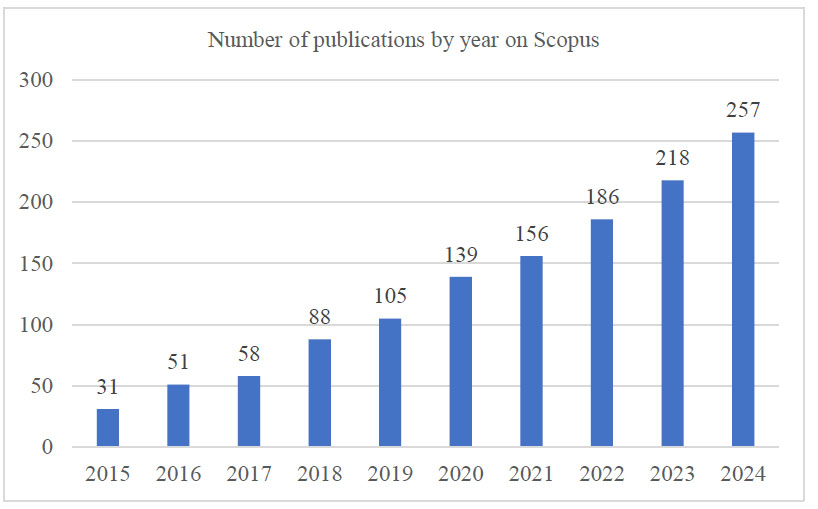
Number of publications by year about customer satisfaction and service quality in the airline industry on the Scopus database.
(Source: Scopus.com, 2025).
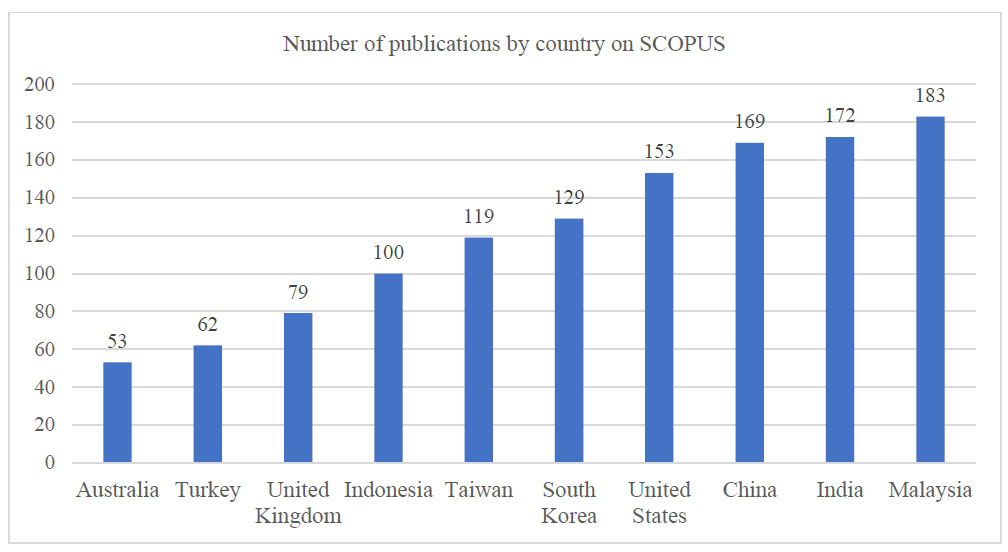
Number of publications by country about customer satisfaction and service quality in the airline industry on the Scopus database.
(Source: Scopus.com, 2025).
| Variable | Cases (%) | Variable | Cases (%) |
|---|---|---|---|
| Age | Flight frequency | ||
| 18–22 | 29 (7,7) | Occasionally (1-2 times/ year) | 113 (30,2) |
| 23–30 | 88 (23,47) | Sometimes (3-5 times/ year) | 95 (25,3) |
| 31–40 41-50 |
112 (2) 101 (12,24) |
Frequently (6-10 times/ year) Very frequently (> 10 times/year) |
93 (24,8) 74 (19,7) |
| Over 50 | 45 (3,80) | - | - |
| Area | Gender | ||
| Megacities (Hanoi, Ho Chi Minh City) | 242 (64.5) | Male | 208 (55,47) |
| Other cities | 133 (35.5) | Female | 167 (44,53) |
| Variables | Outer Loadings | Cronbach’s Alpha | Composite Reliability | Average Variance Extracted | |||
|---|---|---|---|---|---|---|---|
| CS | PR | SC | SQ | ||||
| SQ – Service quality | 0.825 | 0.884 | 0.656 | ||||
| SQ1 | 0.737 | ||||||
| SQ2 | 0.767 | ||||||
| SQ3 | 0.765 | ||||||
| SQ4 | 0.748 | ||||||
| SQ5 | 0.800 | ||||||
| SC – Service convenience | 0.823 | 0.875 | 0.583 | ||||
| SC1 | 0.818 | ||||||
| SC2 | 0.820 | ||||||
| SC3 | 0.816 | ||||||
| SC4 | 0.787 | ||||||
| PR – Perceived risk | 0.834 | 0.882 | 0.600 | ||||
| PR1 | 0.770 | ||||||
| PR2 | 0.799 | ||||||
| PR3 | 0.773 | ||||||
| PR4 | 0.770 | ||||||
| PR5 | 0.759 | ||||||
| CS – Customer satisfaction | 0.802 | 0.870 | 0.627 | ||||
| CS1 | 0.778 | ||||||
| CS2 | 0.816 | ||||||
| CS3 | 0.775 | ||||||
| CS4 | 0.798 | ||||||
| - | CS | PR | SC | SQ |
|---|---|---|---|---|
| CS | - | - | - | - |
| PR | 0.206 | - | - | - |
| SC | 0.454 | 0.215 | - | - |
| SQ | 0.344 | 0.302 | 0.240 | - |
| Path | Original Sample | p-values | Decisions |
|---|---|---|---|
| H1: PR -> CS | 0.058 | 0.288 | Not Supported |
| H2: PR -> SC | 0.137 | 0.022 | Supported |
| H3: SC -> CS | 0.323 | 0.000 | Supported |
| H4: SQ -> CS | 0.209 | 0.000 | Supported |
| H5: SQ -> PR | 0.255 | 0.000 | Supported |
| H6: SQ -> SC | 0.168 | 0.005 | Supported |
This study used the HTMT criterion to evaluate discriminant validity. The results in Table 4 show that the HTMT values of all constructs should not be below 0.90 to verify that the discriminant validity has not been established between two reflective constructs. As the collected data were self-reported by a single source, the potential for common method bias (CMB) should be considered. Therefore, a full collinearity test was conducted to detect the presence of CMB. The VIF values for all constructs were below the threshold of 3.3, suggesting no CMB issues.
4.4. Structural Model Assessment
As indicated by Hair et al. [43], the collinearity values (VIF) of all constructs were below 5, which indicated that there was no concern with collinearity. In order to determine the accuracy of the model path coefficients, a bootstrapping procedure involving 5000 separate samples was carried out. In terms of the direct impacts, Table 5 reveals that only perceived risk (PR) has a p-value that is more than 0.05; hence, PR does not have an effect on the level of customer satisfaction (CS). There is insufficient evidence to support the hypothesis H1; in other words, H1 is not supported. On the other hand, the p-values for the remaining routes were lower than 0.05, indicating significance and lending support to the hypotheses H2, H3, H4, H5, and H6. Furthermore, in this study, it is more efficient to test multiple independent hypotheses about mechanisms simultaneously rather than conducting separate experiments for each step in a hypothesized sequence, particularly when preliminary data suggest the existence of multiple potential pathways.
Moreover, Table 6 presents an in-depth breakdown of the values associated with these indirect routes. The p-value for the path SQ -> PR -> CS is 0.304, which is much above the significance level of 0.05. On the other hand, the p-value for the path SQ -> SC -> CS is 0.017, which indicates that this route is significant. The facts that the direct path SQ -> CS is significant and the mediating effect magnitude VAF is 20.6% suggest that this is a partially mediating relationship. In other words, service convenience partially mediates the relationship between service quality and customer satisfaction in the Vietnamese airline industry (Fig. 5).
| Path | Original Sample | p-values | VAF | Decisions |
|---|---|---|---|---|
| H7: SQ -> PR -> CS | 0.015 | 0.304 | - | Not Supported |
| H8: SQ -> SC -> CS | 0.054 | 0.017 | 20.6% | Supported |
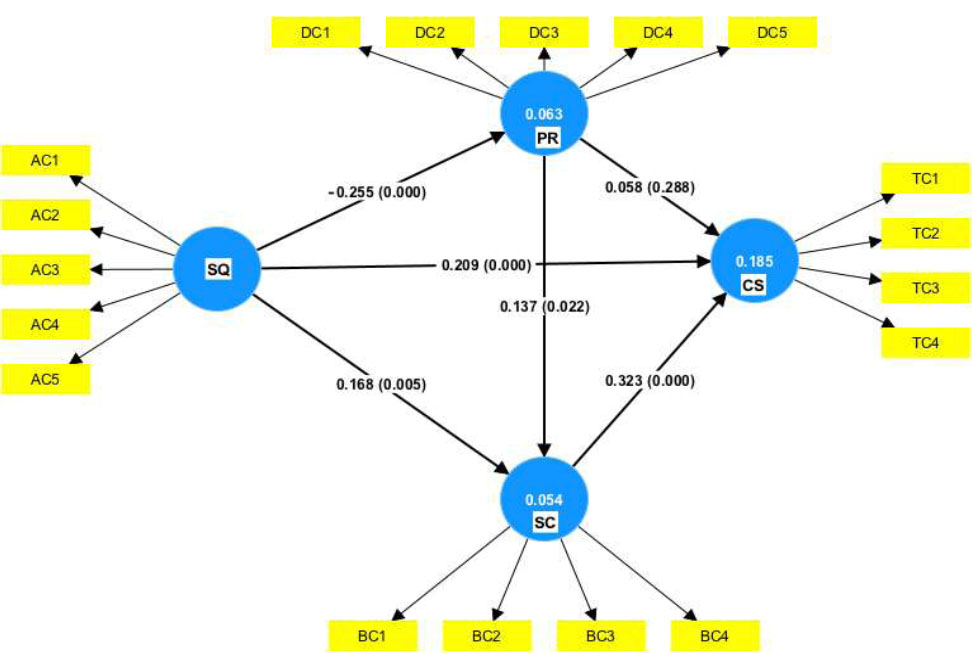
Structural model assessment result.
(Source: Author's compilation).
The value of Adjusted R-squared (R2) for customer satisfaction is 0.185, which demonstrates that service quality and service convenience may explain 18.5% of customer satisfaction in regard to the Vietnamese airline industry. While the effect size (f2) of PR is very weak, the f2 values of SQ and SC range from weak to medium level, suggesting that service quality and service convenience are the main predictors of customer satisfaction in the model.
5. DISCUSSION
5.1. Service Quality Directly Impacts Customer Satisfaction in the Airline Industry
By preserving the service quality and making ongoing improvements, customer satisfaction can be achieved [26]. Airlines must regulate agency fees so that passengers believe the prices being given are fair to all. The airlines must also enhance the in-flight entertainment options, offer dependable services, and facilitate quick check-in and baggage claim in order to increase service quality. The airlines are anticipated to be able to increase customer satisfaction and confidence through improvements in service quality. This would be considered a traditional finding, which is reconfirmed by the research. Especially in the airline industry, where the provision of high-quality service to customers is essential to continued existence, airlines need to consider what consumers expect from their services [42, 44]. The overall impression that a consumer gets of an organization's relative efficacy and the services it provides is one definition of service quality. Besides, airlines in today's competitive market have had to cut costs to remain profitable, but this has frequently come at the expense of service quality and customer satisfaction [45].
5.2. Service Quality Directly Influences Service Convenience and Indirectly Affects Customer Satisfaction through Service Convenience in the Airline Industry
This finding may highlight the importance of service convenience. When there are airline delays, air travellers are more worried about getting to the aircraft without difficulty, connecting to other modes of transportation, connecting with transfers, and finding alternative flights. When assessing service quality, the ambiguity of connecting or alternate timings may be more crucial than the actual journey time. For transporting passengers and their luggage, accurate flight information and directional signage are crucial [17]. These factors also influence how well-served an airport is perceived by air travelers, airlines, and airport operators. A convenient environment allows customers to access services with comfort and ease, encompassing the furnishings and equipment of service facilities, their accessibility, the placement of transfer points, and the spatial relationships among these components [46]. Generally, consumers face increasing time constraints when engaging in activities related to the purchase and consumption of a service [25]. By minimizing the time and effort required from customers, service convenience can enhance the perceived value of the service.
5.3. Service Quality Inversely Affects Perceived Risk in the Airline Industry
Service quality is critical for service providers in multiple aspects, and in this study, it is considered a factor that can reduce perceived risk. In other words, improving service quality can lead to a decrease in perceived risk. Service providers may act opportunistically by exploiting unpredictable risks rather than performing as reliably as expected [42]. Moreover, users’ confidence in airline services diminishes due to technical and relational risks, which, in turn, reduces their willingness to use air travel. When perceived risk is high, customers may opt for alternative modes of transportation [47]. Air travelers should expect to encounter various levels of risk; however, the perceived hazards of flying have not been fully defined, as many online service providers in the airline industry continue to face risks that affect their operations [48].
5.4. Perceived Risk has no Significant Influence on Customer Satisfaction in the Vietnamese Airline Industry
This study finds that the impact of perceived risk on customer satisfaction is statistically insignificant in the context of the Vietnamese airline industry. This may be attributed to the dominance of short-haul flights in Vietnam, where shorter flight durations, familiar routes, and fewer uncertainties render risk perceptions less salient, thereby reducing their influence on satisfaction. This finding aligns with previous research. For example, Mathew et al. [49] suggested that consumers may overlook occasional mishaps with technology-based services, perceiving them as minor early-stage issues inherent to new technologies. From another perspective, while prior experiences may inform customers’ expectations, each flight remains unique and carries inherent risks [29, 50].
This discrepancy warrants further investigation, potentially arising from the unique cultural and market dynamics of Vietnam. For instance, the strong emphasis on trust and personal relationships (guanxi) in Vietnamese culture may mitigate the negative effects of perceived risk, as passengers place greater value on recommendations from their social networks or established trust in local carriers. Additionally, the price-sensitive nature of the Vietnamese market and the dominance of key domestic airlines suggest that customer satisfaction may be driven more by affordability and basic service delivery than by abstract risk assessments. Future research should explore these cultural and industry-specific factors to provide a more comprehensive understanding of the relationship between perceived risk and customer satisfaction in Vietnam’s airline sector.
Although Internet usage for airline reservations is among the highest across all product and service categories, no study has conclusively assessed the role of perceived risk in the consumer purchasing process. Airline service providers appear to enhance service conditions in ways that maintain customer satisfaction and minimize the perceived risk associated with modern air travel.
CONCLUSION
Implications
Theoretical Implications
The research findings provide several theory-related implications. Firstly, the relationship between customer satisfaction and service quality has long been recognized, yet it remains a critical topic in the airline industry. As competition intensifies in the airline sector, service quality may vary and should be examined through different components or structural frameworks to gain a deeper understanding. Overall, the findings suggest that airline enterprises in Vietnam should prioritize strategies that differentiate their services to enhance customer satisfaction. These insights are valuable for policymakers and practitioners seeking to better understand key aspects of airline service quality, especially given the rapid growth of tourism and air traffic in Vietnam in recent years.
Additionally, general perceived risk appears to have minimal impact on customer satisfaction, which is a positive outcome for airlines. Nonetheless, other factors influencing satisfaction warrant further investigation. Modern passengers tend to perceive airline risks as vague, focusing more on concerns, such as flight delays, weather conditions, high ticket prices, and the overall flying experience.
Managerial Implications
Airline staff are advised to demonstrate genuine care and attentiveness to customers’ individual needs. Airline passengers have high expectations and demand personalized service. As passengers prioritize receiving better, customized service delivered with empathy, airlines should recruit and train their human resources to meet this demand [3].
In the Vietnamese context, managers and policymakers should continue and accelerate the construction of new airports, such as Long Thanh, and the expansion or upgrading of existing airports to address current capacity constraints and provide more comfortable spaces. Enhancing collaboration with international partners, such as Airport Dimensions, to improve the quality and variety of airport lounges and to offer more comfortable, productive spaces for travelers is also essential. Customers increasingly expect personal warmth, tailored attention, and a sense of pride in the service they receive.
Regarding airline service quality, service convenience reflects the benefits gained in the service delivery process relative to the effort or cost required to obtain the service. Positive perceptions of service convenience drive a range of favorable outcomes, including increased customer satisfaction [46, 51]. These positive behaviors are critical for fostering long-term customer relationships and enhancing the likelihood of repeat purchases.
This study empirically confirms the direct relationship between customer satisfaction and service quality, as well as the mediating effect of service convenience. These findings underscore the importance of airline management focusing on both service quality and service convenience to ensure passenger satisfaction. Satisfied passengers are more likely to recommend the airline to others, express satisfaction with their flight experience, and remain loyal to the airline, which can help low-cost carriers differentiate themselves in a competitive market [25, 31].
Limitations and Future Research Works
This study has several limitations that can be addressed in future research. First, perceived risk in airline services is treated in a generalized manner or as a combination of different risks, such as physical, performance, and financial risks. Future studies should consider breaking down perceived risk into its constituent dimensions; for example, physical risk related to safety and health, performance risk concerning service reliability, financial risk associated with ticket costs and potential losses, social risk linked to reputation and others’ opinions, and psychological risk regarding anxiety and stress. Examining the differential impacts of these individual risk dimensions on customer satisfaction and airline choice across various Asian markets would provide a richer understanding.
Second, this study was conducted in an underdeveloped Southeast Asian country, Vietnam; hence, the findings may not generalize to other geographical areas. Future research could address this limitation through cross-country comparative studies. Investigating how the relationships among service quality, customer satisfaction, perceived risk, and service convenience manifest in other diverse Asian nations (e.g., Japan, South Korea, India, Singapore, Malaysia) could reveal cultural nuances and market-specific dynamics, highlighting which findings are generalizable and which are context-dependent.
Additionally, this study did not include control variables. Factors, such as age, gender, education level, income, and travel frequency, could significantly influence how passengers perceive service quality, evaluate risks, value convenience, and ultimately determine satisfaction. Examining these moderating effects would allow for more targeted marketing and service strategies. Future research should consider how these variables affect customer satisfaction.
Finally, the adjusted R2 value (0.185) indicates limited explanatory power of the model, suggesting that important variables may have been omitted. Subsequent studies should incorporate additional relevant factors to enhance the explanatory power and significance of the analytical model.
Despite these limitations, this study contributes valuable insights into the relationship between service quality and customer satisfaction, highlighting the mediating role of service convenience. Interestingly, perceived risk appears to have little impact on customer satisfaction in the Vietnamese airline industry. The findings offer both theoretical and practical implications for airline carriers seeking to enhance performance. However, limitations related to research methodology and sampling remain. While this study focuses on the effects of service quality on customer satisfaction mediated by perceived risk and service convenience, it does not account for other potentially influential variables. Furthermore, a PLS-SEM bootstrapping approach was used to examine the mediation effect of satisfaction based on indirect effects. Consequently, the conceptual model developed in this study may serve as a useful reference for future research investigating the influence of service quality on customer satisfaction through service convenience in airline services.
Research Contribution
This research significantly extends existing literature by offering a tripartite contribution. Firstly, it provides robust evidence for service convenience as a mediator in the rapidly expanding, often infrastructure-strained emerging Asian aviation markets, particularly in Vietnam. Unlike established markets, where convenience might be a differentiator, our findings highlight its fundamental role in translating service quality and other antecedents into favorable passenger outcomes in contexts experiencing immense growth and infrastructural pressures. Secondly, the study underscores the contextual insignificance of generalized risk perception in short-haul environments. This challenges broader assumptions about risk's pervasive influence, demonstrating that in frequent, often routine, short-duration air travel common in domestic Asian markets, passengers deprioritize generalized safety concerns in favor of immediate service attributes. This suggests a unique psychological calculus at play in such environments. Finally, the research refines the Stimulus-Organism-Response (S-O-R) framework for airline services. By specifically examining service convenience and quality as stimuli and incorporating a nuanced understanding of passengers' cognitive and affective states in the context of short-haul travel, it provides a more granular, empirically supported model for predicting passenger behavioral intentions in the dynamic Asian aviation landscape.
AUTHORS’ CONTRIBUTIONS
It is hereby acknowledged that all authors have accepted responsibility for the manuscript's content and consented to its submission. They have meticulously reviewed all results and unanimously approved the final version of the manuscript.
LIST OF ABBREVIATIONS
| COVID-19 | = Coronavirus disease 2019 |
| PLS-SEM | = Partial Least Squares Structural Equation Modeling |
| VOSviewer | = Visualization of Similarities viewer |
| AVE | = Average variance extracted |
| HTMT | = Heterotrait-Monotrait |
| VIF | = Variance Inflation Factor |
| CMB | = Common Method Bias |
AVAILABILITY OF DATA AND MATERIALS
All data generated or analyzed during this study are included in this published article.
ACKNOWLEDGEMENTS
Declared none.